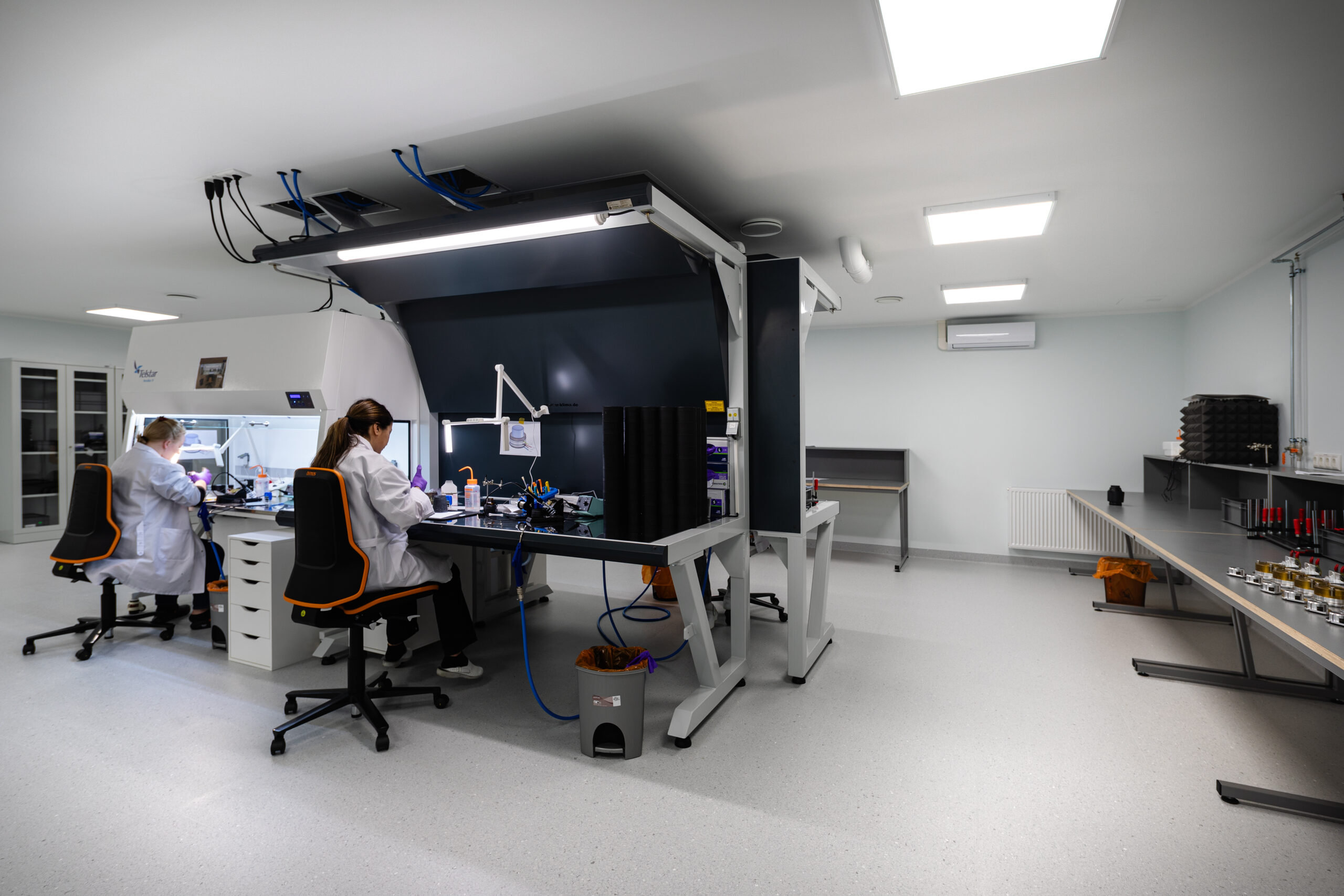
Our research in next-generation night vision combines advanced image intensifier architectures, hybrid photocathode systems, and thin-film optical engineering to achieve superior low-light performance. Through precision prototyping, signal amplification optimisation, and system-level validation, we develop deployable night-vision solutions for defence, tactical surveillance, and industrial monitoring in low-light environments.
From improved gain stability to longer operational lifetime, we turn laboratory innovation into field-ready optical systems built for mission-critical use.
Our translational engineering workflow connects photocathode science, image intensifier design, and environmental validation. By combining laboratory research with hybrid sensor prototyping and performance optimisation, we accelerate the path from advanced optical concepts to deployable night-vision systems.
Thin-film design, photocathode development, and gain-layer optimisation for next-generation low-light sensing.
Integration of EB-CMOS, ICMOS, and digital night-vision architectures into advanced sensing platforms.
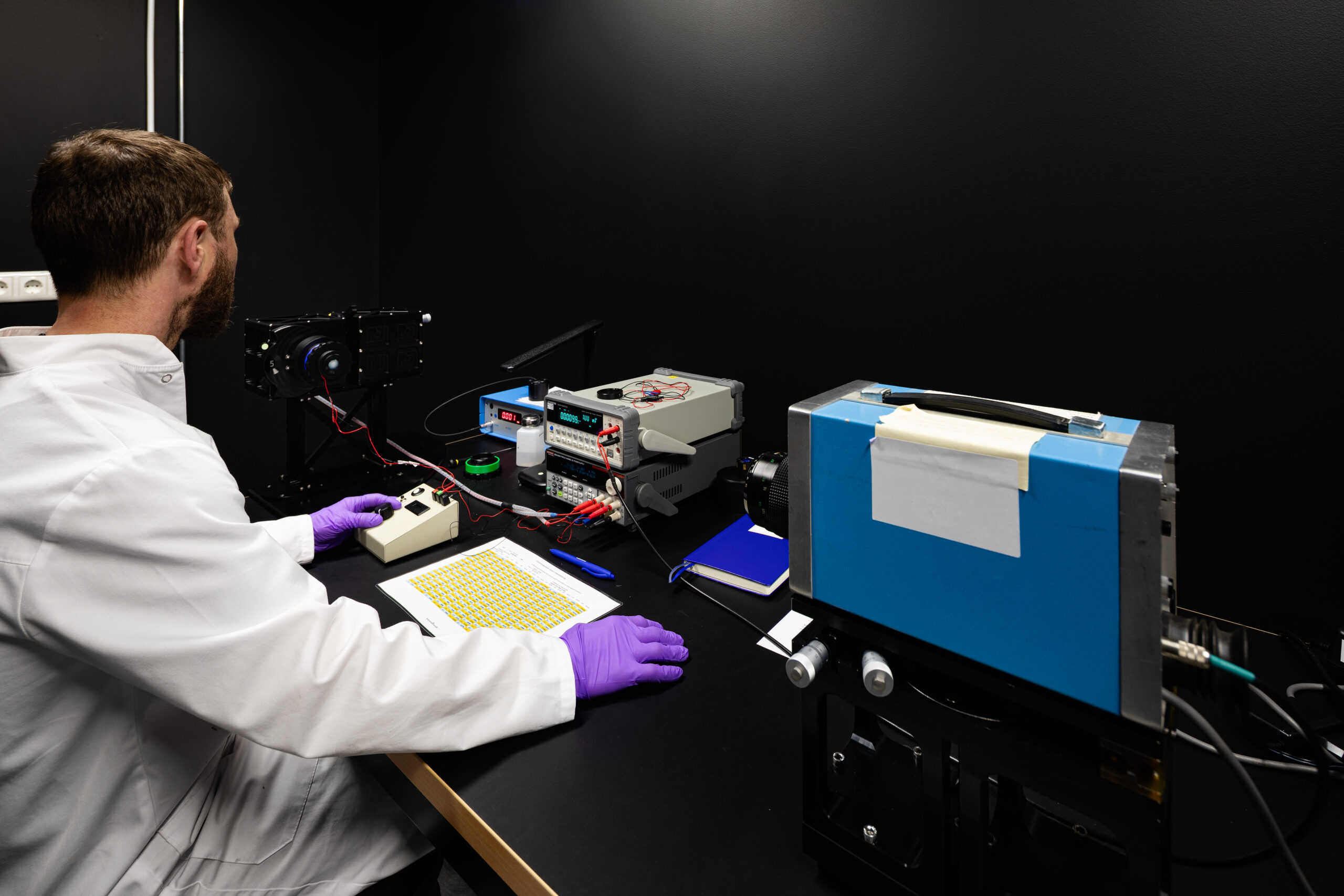
Fast, rigorous testing workflows that shorten the path from laboratory prototype to field deployment.
We combine scientific precision with systems engineering to deliver measurable improvements in low-light performance. From photocathode optimisation and gain control to AI-assisted noise suppression, our work is guided by reliability, manufacturability, and deployment readiness.
We rapidly prototype new designs and validate photocathode performance, assessing efficiency, stability, and response under realistic operating conditions.
We integrate EB-CMOS–based architectures and conduct detailed benchmarking of low-light performance, focusing on sensitivity, noise characteristics, and overall system reliability.
Breakthroughs in night-vision technology depend on close collaboration between defence, industry and academia. We work with specialised optical laboratories, systems integrators, and technology partners to accelerate the development of validated low-light sensing solutions.
Joint research with universities and specialised optical laboratories in low-light sensing and advanced photonics.
Long-term partnerships with defence, industrial, and night-vision system stakeholders.
Co-development of deployable night-vision and tactical optical sensing technologies.


An international R&D center specializing in applied photonics, optical system development, and experimental validation, bridging fundamental research with real-world optical performance.
Copyright © 2026 All Rights Reserved.