

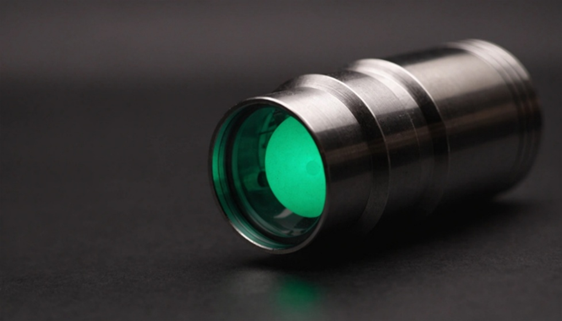
Filmless image intensifier architectures represent one of the most significant technological advances in analogue night-vision systems since the introduction of Generation III image intensifier tubes. By eliminating the ion-barrier film positioned at the input of the microchannel plate (MCP), filmless designs recover electrons that would otherwise be absorbed before multiplication, resulting in improved signal-to-noise ratio (SNR), reduced halo effects, enhanced image resolution, and increased long-range detection capability [1], [5]. These performance improvements have positioned filmless technology at the forefront of modern low-light imaging research and form a key area of investigation within the Photonics International R&D center.
Current European research demonstrates that filmless image intensifier technology has matured into a strategic capability for advanced defence and security applications [1], [2], [4]. The latest European tube families, including the 4G and 4G+ architectures, combine hybrid photocathodes with proprietary microchannel plate technologies to achieve Figures of Merit (FOM) exceeding 2200 while incorporating ultra-fast auto-gating capable of responding to muzzle flashes and sudden illumination changes within microseconds [1], [5]. In addition, their spectral sensitivity extends significantly beyond conventional Generation III systems, approaching wavelengths of approximately 1100 nm, thereby enabling improved detection of near-infrared laser designators and active illumination sources [1], [5]. Operational evaluations conducted under European defence programmes have reported Detection–Recognition–Identification (DRI) improvements of 50–60% compared with previous-generation night-vision systems, leading to their adoption in major European military procurement programmes [2], [3].
At the Photonics International R&D center, our research focuses on understanding the underlying physical mechanisms that enable the superior performance of filmless image intensifiers rather than reproducing existing commercial products. Current investigations include gain stability during auto-gated operation, halo generation around high-intensity point light sources, photocathode–MCP interface degradation, ion-feedback mechanisms, and lifetime behaviour in the absence of an ion-barrier film. Experimental validation is performed using reproducible laboratory procedures under precisely controlled illumination conditions extending from daylight to overcast starlight. Emphasis is placed on two strategic spectral regions within our research roadmap: the solar-blind ultraviolet (UV-C, 200–280 nm) band and the near-infrared region centred around 1060 nm, where optimised filmless architectures offer considerable potential for laser-event detection, threat warning, and advanced multispectral sensing applications.
Despite the significant performance improvements offered by filmless technology, several scientific and engineering challenges remain. These include effective suppression of ion feedback without sacrificing electron transmission, balancing high gain with extended operational lifetime, and achieving high manufacturing yield for increasingly sophisticated nanostructured microchannel plate architectures. Looking forward, filmless image intensifiers are expected to converge with electron-bombarded CMOS (EB-CMOS) sensors, digital image processing, and artificial intelligence-based image enhancement to create hybrid electro-optical imaging systems. The validation infrastructure being developed at the Photonics International R&D center is designed to support this transition by enabling conventional image intensifier tubes to be re-evaluated as components within future digital sensor architectures. Through these activities, the center aims to contribute to European strategic autonomy in advanced low-light sensing technologies while supporting the objectives outlined in the European Defence Fund (EDF) programmes for next-generation optronic systems.
REFRENCES
[1] Exosens. 4G and 4G+ Image Intensifier Tube: Technical Documentation and Gen III vs. 4G Comparison White Paper (2020–2024).
Available: https://www.exosens.com/products/image-intensifier-tube-4g
[2] Exosens. Photonis 4G Tubes in the ONYX Program – DGA/Thales LAS Procurement Programme (2025).
Available: https://www.exosens.com/newsroom
[3] OCCAR; HENSOLDT–Theon Consortium. Mikron Night Vision Goggle Procurement for the German and Belgian Armed Forces (December 2025).
Available: https://www.occar.int
[4] European Commission. European Defence Fund (EDF) Work Programmes 2025–2026: Optronic Sensing Topics (EDF-2025-DA-SENS-IRD-STEP).
Available: https://defence-industry-space.ec.europa.eu/eu-defence-industry/european-defence-fund-edf_en
[5] Exosens. 4G Image Intensifier Tube Technical Leaflet, Updated Edition (2026).
Available: https://www.exosens.com/products/image-intensifier-tube-4g
RP Photonics Encyclopedia. Image Intensifiers and Image Converters.
Available: https://www.rp-photonics.com/image_intensifiers.html